Plastic 3D Printing
From your office to the factory floor, our Plastic 3D Printers generate concept models, precision and functional prototypes, master patterns and molds for tooling, and real end-use parts to optimize your designs, streamline your workflows, and bring innovative products to market faster. With 3D printing, you can create models out of many different materials. The Plastic 3D Printers we offer are Stereolithography (SLA), Selective Laser Sintering (SLS), Figure 4, MultiJet, Pellet Extrusion, and Fused Filament Fabrication (FFF) or Fused Deposition Modeling (FDM).

Email: info@anima.eu
Contact number: +30 210 77 76 822
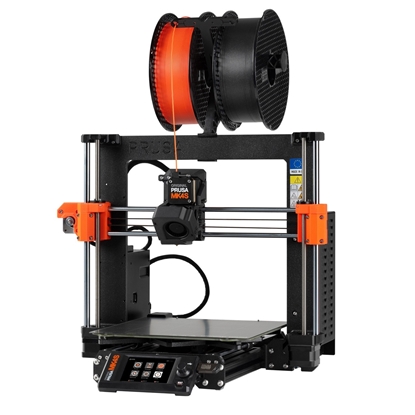
The MK4S is the latest iteration of our flagship 3D printing workhorse. Easy to set up and run, with top-class reliability and safety features, the MK4S delivers the highest quality 3D prints faster than ever. Designed and built in the EU.
1.050,00 €
Available upon request

Build Volume250 x 210 x 220 mm | 9.84 x 8.3 x 8.6 in
Layer Height0.05-0.30 mm
Filament Diameter1.75mm
Maximum Nozzle Temperature290 °C / 554 °F
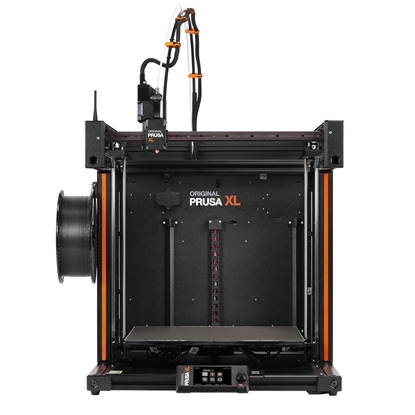
The Original Prusa XL is a large-format CoreXY FDM 3D printer intended for users who require significantly greater build volume and process flexibility compared to typical desktop systems. In its single-toolhead configuration, the XL delivers consistent dimensional accuracy across a 360 × 360 × 360 mm build volume. The machine’s design includes a segmented heated bed, automatic probing and mesh leveling, network connectivity, and an architecture that supports future expansion to multiple toolheads. It is suitable for larger prototypes, tooling components, and functional assemblies that would otherwise need segmentation on smaller platforms.
1.854,00 €
Available upon request
Build Volume360×360×360 mm
Layer Height0.05-0.30 mm
Filament Diameter1.75mm
Maximum Nozzle Temperature290 °C / 554 °F
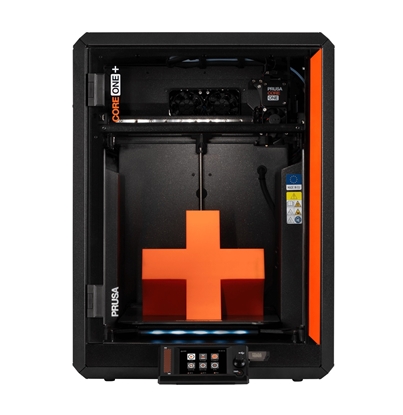
The Prusa CORE One+ is a fully enclosed FDM/FFF 3D printer designed for professional use across prototyping, functional testing, and low-volume production workflows. It is engineered around a CoreXY motion system and features automated calibration, integrated sensors, and networking capability. The CORE One+ supports a broad range of thermoplastics and incorporates a controlled build environment with filtration, enabling printing with engineered materials while maintaining predictable results and straightforward maintainability
1.090,00 €
Available upon request
Build Volume250 × 220 × 270 mm
Layer Height0.05-0.30 mm
Filament Diameter1.75mm
Maximum Nozzle Temperature290 °C / 554 °F
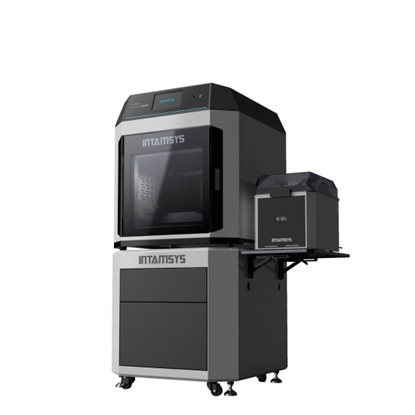
The FUNMAT PRO 310 APOLLO is an advanced industrial FFF 3D printer designed for high-performance materials, fast production, and consistent print quality. From PEEK prototyping to manufacturing durable PAEK end-use parts, INTAMSYS delivers reliable, production-ready additive manufacturing for demanding industrial applications.

3D Printing TechnologyFFF - FDM
Build VolumeSingle: 305 x 260 x 260mm
Build VolumeDual: 260 x 260 x 260mm
Layer Thickness0.1 - 0.3mm
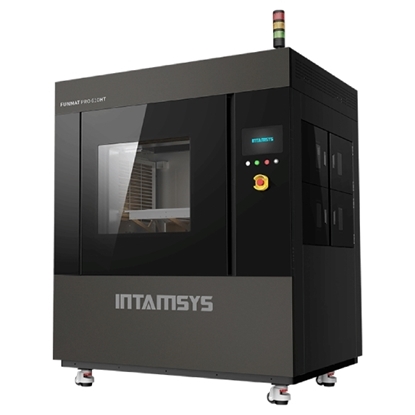
The INTAMSYS FUNMAT PRO 610HT is an advanced industrial FFF 3D printer engineered for demanding high-performance thermoplastics. Designed for reliable, high-quality additive manufacturing, it enables the production of strong, accurate parts for challenging industrial applications.
3D Printing TechnologyFFF - FDM
Build Volume610 x 508 x 508mm
Layer Thickness0.15mm, 0.2mm, 0.25mm
Print Heads2

Certifications